The Kotatsu
A Winter Sanctuary, or Perchance the Sword of Damocles
I primarily take my repose and rise in an old dwelling house. In this abode, besides myself, there dwell three human beings. Two of them are a wedded pair, and the remaining one appears to be their child. This designation of “child” is merely a genetic expression. She has long since reached adulthood, yet still has not departed from beneath the parental roof. In feline society, this would be considered parental negligence, but otherwise, they appear rather to rejoice in their child’s continued residence.
As for the child herself, she styles herself a “kodooba.” The meaning of this remains unclear to me, but judging from her manner when saying it, it may not be a matter of particular pride. Here, in deference to her self-designation, allow me to call her “Miss Kodooba.”
Miss Kodooba performs scarcely any of the household duties typically expected of adults. The same applies to attending to my needs. She occupies a room on the second floor, seated before a computer placed upon a desk. There, she professes to be working. As to what precisely she does, at times she points at the display whilst counting “one, two, three,” at other times she speaks while moving the mouse in what could be conversation or soliloquy, and when I thought she was typing at the keyboard, all motion suddenly ceased, so upon investigation I found her sleeping—such are her activities. I cannot discern where work begins and ends. However, Miss Kodooba frequently voices complaints about her work, so there must be tribulations incomprehensible to others.
Thus, while Miss Kodooba could be considered immature as an adult by feline race standards, every human possesses some merit. She is no exception. In November, when temperatures drop sharply during the night hours, it is none other than this Miss Kodooba who is first to bring forth the kotatsu.
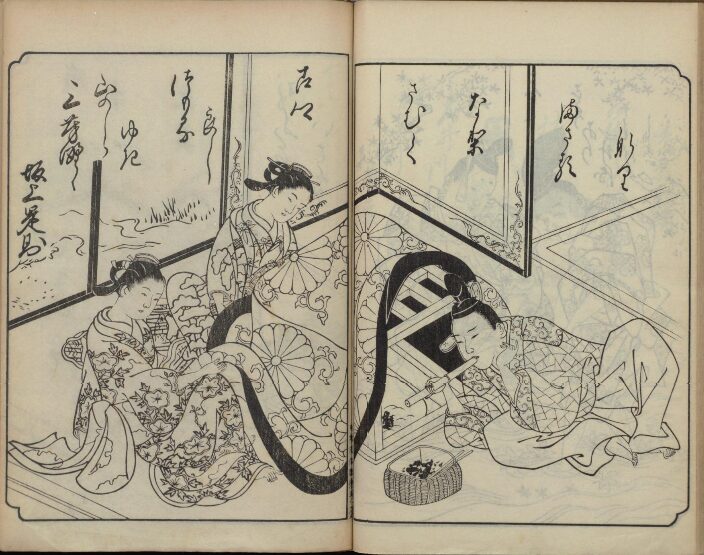
It would be no shame to declare this openly. I—nay, we of the feline race—are fond of the kotatsu. Surely there is no reader here unfamiliar with the kotatsu, but as learning begins with fundamentals, it is both my duty and responsibility to explain it anew.
A kotatsu is a heating apparatus wherein a heat source is placed beneath a table, and a quilted coverlet is draped over the table to retain the warmth within. How do humans employ this device? They sit about the table and warm themselves by placing their lower bodies beneath the coverlet. This device is not unique to Japan; I am given to understand that similar heating devices are also used in other cold climates with floor-based lifestyles, such as Iran.
Now, what are its origins? Its existence is confirmed in 15th-century documents, and the term is said to derive from “katō” (火榻:fire platform), which in the Muromachi period (14th-16th centuries) referred to a frame erected around a hearth in Zen temples. In our present day, the heat source is an electric heater, but in those times the kotatsu was heated by charcoal, which was relatively expensive. Therefore, only temples and court nobles—those with financial means—could afford to use the kotatsu. Its spread among the common people occurred during the Edo period (17th-19th centuries), when urbanization advanced and land and water transportation networks were established.
Presumably, we of the feline race were captivated by the kotatsu from the very beginning, and this fact was widely known among humans. Otherwise, the combination of cats and kotatsu would not have been depicted in 17th-century ukiyo-e prints. Furthermore, without such a background, the kotatsu would not have come to be called “neko” (cat) in parts of Saitama Prefecture.
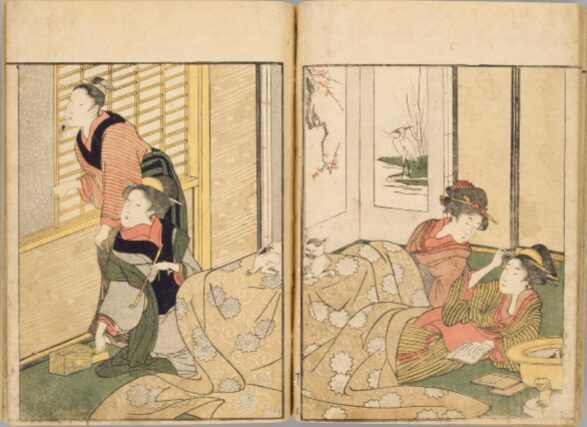
What, then, is the appeal of the kotatsu for feline race? First, it is warm. While the thermal neutral zone for humans in winter is 18-22°C, for domestic cats it is 30-35°C. Moreover, we maintain the principle of spending the entire year within the same fur garment. That is to say, warmth is not a matter of choice, but an absolute prerequisite that permits no compromise whatsoever.
Second, once inside, it is an enclosed space. I have yet to encounter a cat with claustrophobia. The reason is evident. An enclosed space is a place where one can hide from threats, or at the very least, it functions as a place that can guarantee psychological safety by our belief that it does so. This must surely be instinctual.
Finally, and perhaps most importantly, temperature regulation is easily accomplished. Why so? Humans, who have hair only on parts of their bodies, are said to have sweat glands throughout their bodies, whereas we possess them solely on our paw pads and noses. Since our means of regulating our own body temperature are extremely limited, we have no recourse but to regulate through our environment. The availability of multiple temperature zones is likewise a prerequisite.

Here is how we of the feline race employ the kotatsu. When it is coldest, one simply entereth within. This is the fundamental principle. However, remaining inside for an extended period can make one feel overheated. In such cases, one need only protrude one’s head or upper body from beneath the coverlet, just as humans do. Should one feel even warmer, one may exit entirely and repose upon the plush coverlet. In the era when charcoal served as the heat source, there being no tabletop, feline race apparently reclined upon the kotatsu itself. Indeed, my illustrious predecessor, the nameless cat, was likewise fond of the kotatsu’s summit. One can easily imagine how agreeable this must be.
When Miss Kodooba brings forth the kotatsu, she dons a thick jacket called a hanten, hunches her back, and there labors at her computer. The time she spends drowsing with her lower body wrapped snugly beneath the kotatsu coverlet appears longer than that spent at her desk. As it is called work, surely there must be deadlines, but will she truly manage thus? Moreover, the time she spends seated in the kotatsu far exceeds the time she spends at her desk. Beyond the kotatsu, there is no heating by electric apparatus. Should she venture forth, it is cold. Small wonder. As a consequence, she neglecteth even such grooming as we of the feline race would never fail to perform. Her mother voices her concerns, but Miss Kodooba’s replies are ever non-committal. At this rate, her forming a wedded pair remains a prospect for the distant future.
When charcoal is burned with insufficient oxygen, incomplete combustion occurs, producing carbon monoxide. In the era when charcoal served as the heat source for kotatsu, accidents wherein not only the feline race but humans too suffered carbon monoxide poisoning were not uncommon. In our present day, the danger to feline race is at most being kicked by humans who carelessly thrust their feet into the kotatsu. But what of humans? The kotatsu is certainly a winter sanctuary and at the same time a throne. And thrones are always accompanied by danger. Today, this danger is surely not directed at feline race, but at humans themselves.
References
- 「日本民家語彙集解」日本建築学会/民家語彙集録部会 編
- 「物事起源辞典 衣食住編」東京堂出版
- https://www.jstage.jst.go.jp/article/shase/46/288/46_1/_pdf/-char/ja
- https://ja.wikipedia.org/wiki/炬燵